Personal care · Product label guide
Deodorant: compare ingredients, then choose.
Updated
Compare deodorant sticks, sprays and gels by their full ingredient list: aluminum antiperspirant salts, fragrance, drying alcohol, parabens and harsh preservatives.
Picks by need · 13 current labels, checked through 2026-11-21
Best deodorant by what you want
Of the 13 deodorant we can score by label, 0 list none of the 7 personal-care ingredient checks for this shelf. The top label is Suave Aluminum Free Ocean Charge Men’s Deodorant (86/100); for no EU fragrance allergens, Native Deodorant Stick. The check failed most often on this shelf is fragrance (13 labels).
Top label score
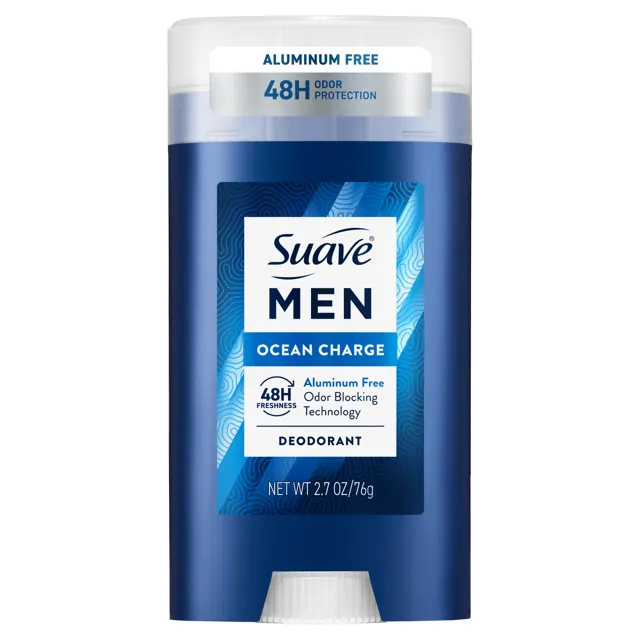 SuaveAluminum Free Ocean Charge Men’s Deodorant86
86/100. Lists fragrance. 11 ingredients.
Find where to buy ↗No EU fragrance allergens
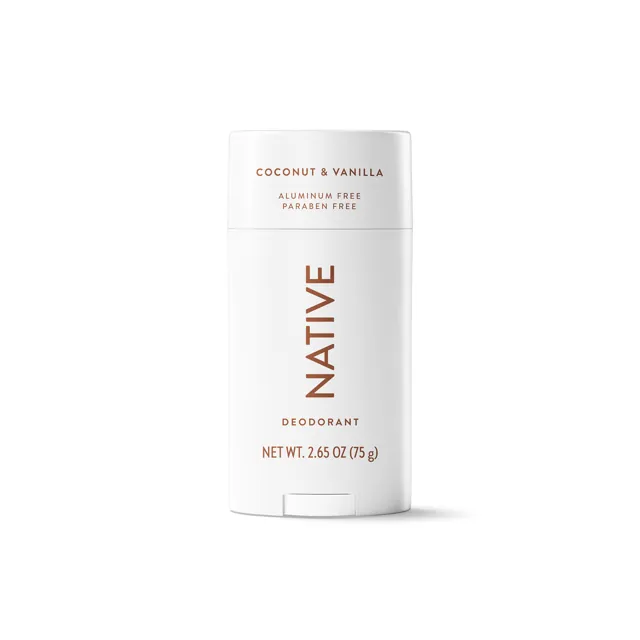 NativeDeodorant Stick86
86/100. None of the fragrance allergens the EU requires on labels (linalool, limonene and others) is listed.
Find where to buy ↗Shortest label
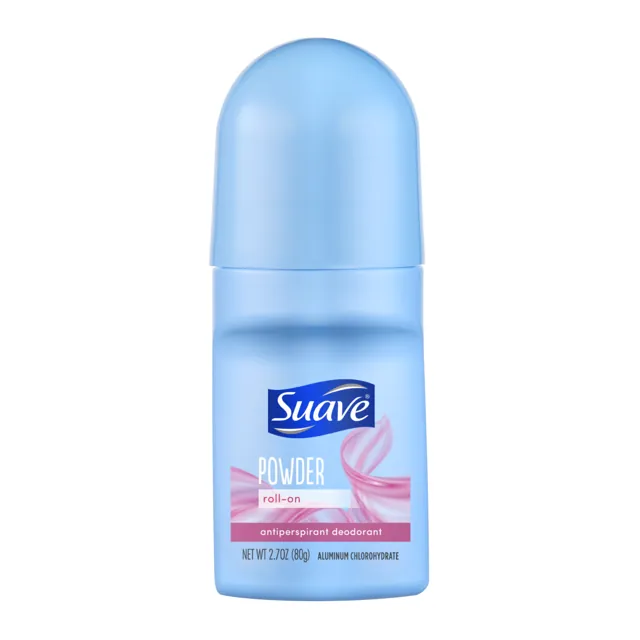 SuavePowder Roll on Antiperspirant Deodorant71
6 ingredients: “Active Ingredient(S): Aluminum Chlorohydrate (22%) Others Ingredients: Water (Aqua), Ppg-1…”
Find where to buy ↗
Most flagged: Suave Powder Roll on Antiperspirant Deodorant lists fragrance and aluminum antiperspirant salts (71/100); Suave Active Sport Men’s Antiperspirant Deodorant lists fragrance and aluminum antiperspirant salts (71/100); Native Whole Body Deodorant Spray lists fragrance and drying alcohol (71/100).
A 0 to 100 label score for personal care: an equal share for each check the ingredient list passes: no fragrance, no sulfates, no parabens, no formaldehyde releasers or MI/MCI, no drying alcohol and no added colors, plus aluminum-free for deodorants, mineral-only UV filters for sunscreens and silicone-free for hair care. It reads the label only and is not a safety rating.
Compare the recorded labels
Find the ingredients that matter to you.
“No …” columns: None found on the label · Listed on the label · Unknown. Personal-care checks read the ingredient list only (rules and sources); not a safety rating.
| Buy | ? | ? | ? | ? | ? | ? | ? | |||
|---|---|---|---|---|---|---|---|---|---|---|
| 86 / 1006 of 7 checks passed | Find where to buy ↗Product details → | 6 | ||||||||
Recorded ingredients DIPROPYLENE GLYCOL, WATER (AQUA), PROPYLENE GLYCOL, SODIUM STEARATE, POLOXAMINE 1307, FRAGRANCE (PARFUM), AMINOMETHYL PROPANOL, DISODIUM EDTA, BHT, SIMETHICONE, LIMONENE. Label checked 2026-11-17 · US Ingredient evidence source ↗Producer claims Sourcing claim not reviewed The catalog establishes this product’s name and photograph. Sourcing claims and a complete ingredient label may still need review. Producer claim source ↗Reviewed | ||||||||||
| 86 / 1006 of 7 checks passed | Find where to buy ↗Product details → | 6 | ||||||||
Recorded ingredients Caprylic/Capric Triglyceride, Stearyl Behenate, Magnesium Oxide, Tapioca Starch, Cyclodextrin, Butyrospermum Parkii (Shea) Butter, Tribehenin, Fragrance, Cocos Nucifera (Coconut) Oil, Piroctone Olamine, Bisabolol, Oryza Sativa (Rice) Bran Wax, Zingiber Officinale (Ginger) Root Extract. Label checked 2026-11-16 · US Ingredient evidence source ↗Producer claims Sourcing claim not reviewed The catalog establishes this product’s name and photograph. Sourcing claims and a complete ingredient label may still need review. Producer claim source ↗Reviewed | ||||||||||
| 86 / 1006 of 7 checks passed | Find where to buy ↗Product details → | 6 | ||||||||
Recorded ingredients Caprylic/Capric Triglyceride, Tapioca Starch, Stearyl Behenate, Magnesium Hydroxide, Butyrospermum Parkii (Shea) Butter, Fragrance, Cocos Nucifera (Coconut) Oil, Magnesium Carbonate, Oryza Sativa (Rice) Bran Wax, Piroctone Olamine, Bisabolol, Tocopheryl Acetate, Zingiber Officinale (Ginger) Root Extract. Label checked 2026-11-16 · US Ingredient evidence source ↗Producer claims Sourcing claim not reviewed The catalog establishes this product’s name and photograph. Sourcing claims and a complete ingredient label may still need review. Producer claim source ↗Reviewed | ||||||||||
| 86 / 1006 of 7 checks passed | Find where to buy ↗Product details → | 6 | ||||||||
Recorded ingredients Caprylic/Capric Triglyceride, Tapioca Starch, Stearyl Behenate, Magnesium Hydroxide, Tribehenin, Fragrance, Cocos Nucifera (Coconut) Oil, Magnesium Carbonate, Butyrospermum Parkii (Shea) Butter, Oryza Sativa (Rice) Bran Wax, Piroctone Olamine, Bisabolol, Tocopheryl Acetate, Zingiber Officinale (Ginger) Root Extract. Label checked 2026-11-16 · US Ingredient evidence source ↗Producer claims Sourcing claim not reviewed The catalog establishes this product’s name and photograph. Sourcing claims and a complete ingredient label may still need review. Producer claim source ↗Reviewed | ||||||||||
| 86 / 1006 of 7 checks passed | Find where to buy ↗Product details → | 6 | ||||||||
Recorded ingredients Dipropylene Glycol, Water (Aqua), Propylene Glycol, Sodium Stearate, Poloxamine 1307, Fragrance (Parfum), Aminomethyl Propanol, Disodium EDTA, BHT, Benzyl Salicylate, Citronellol, Hexyl Cinnamal, Limonene, Linalool. Label checked 2026-11-17 · US Ingredient evidence source ↗Producer claims Sourcing claim not reviewed The catalog establishes this product’s name and photograph. Sourcing claims and a complete ingredient label may still need review. Producer claim source ↗Reviewed | ||||||||||
| 86 / 1006 of 7 checks passed | Find where to buy ↗Product details → | 6 | ||||||||
Recorded ingredients Dipropylene Glycol, Water (Aqua), Propylene Glycol, Sodium Stearate, Poloxamine 1307, Fragrance (Parfum), Aminomethyl Propanol, Disodium EDTA, BHT, Alpha-Isomethyl Ionone, Benzyl Alcohol, Citral, Citronellol, Geraniol, Limonene, Linalool. Label checked 2026-11-17 · US Ingredient evidence source ↗Producer claims Sourcing claim not reviewed The catalog establishes this product’s name and photograph. Sourcing claims and a complete ingredient label may still need review. Producer claim source ↗Reviewed | ||||||||||
| 86 / 1006 of 7 checks passed | Find where to buy ↗Product details → | 6 | ||||||||
Recorded ingredients WATER (AQUA), PROPANEDIOL, POLYSORBATE 20, MANDELIC ACID, GLYCERIN, FRAGRANCE (PARFUM), AZELAIC ACID, MAGNESIUM PCA, ZINC PCA, GLYCYRRHIZA GLABRA (LICORICE) ROOT EXTRACT, SHIKIMIC ACID, PANTHENOL, OCTENIDINE HCL, SODIUM PHYTATE, CALCIUM GLUCONATE, HYDROXYETHYLCELLULOSE, POLYSORBATE 60, PHENOXYETHANOL, GLUCONOLACTONE, SODIUM BENZOATE, POTASSIUM HYDROXIDE, SODIUM PHOSPHATE, DISODIUM PHOSPHATE, CITRIC ACID, SODIUM CITRATE, ALPHA-ISOMETHYL IONONE, COUMARIN, VANILLIN, POGOSTEMON CABLIN OIL, CANANGA ODORATA OIL/EXTRACT, HEXADECANOLACTONE. Label checked 2026-11-16 · US Ingredient evidence source ↗Producer claims Sourcing claim not reviewed The catalog establishes this product’s name and photograph. Sourcing claims and a complete ingredient label may still need review. Producer claim source ↗Reviewed | ||||||||||
| 71 / 1005 of 7 checks passed | Find where to buy ↗Product details → | 5 | ||||||||
Recorded ingredients Active Ingredient(S): Aluminum Chlorohydrate (22%) Others Ingredients: Water (Aqua), Ppg-11 Stearyl Ether, Steareth-2, Steareth-20, Fragrance (Parfum), Glycerin. Label checked 2026-11-17 · US Ingredient evidence source ↗Producer claims Sourcing claim not reviewed The catalog establishes this product’s name and photograph. Sourcing claims and a complete ingredient label may still need review. Producer claim source ↗Reviewed | ||||||||||
| 71 / 1005 of 7 checks passed | Find where to buy ↗Product details → | 5 | ||||||||
Recorded ingredients Active Ingredient: ALUMINUM ZIRCONIUM. Inactive ingredients: Cyclopentasiloxane, Stearyl Alcohol, C12-15 Alkyl Benzoate, PPG-14 Butyl Ether, Hydrogenated Castor Oil, Fragrance (Parfum), Polyethylene, BHT. Label checked 2026-11-17 · US Ingredient evidence source ↗Producer claims Sourcing claim not reviewed The catalog establishes this product’s name and photograph. Sourcing claims and a complete ingredient label may still need review. Producer claim source ↗Reviewed | ||||||||||
| 71 / 1005 of 7 checks passed | Find where to buy ↗Product details → | 5 | ||||||||
Recorded ingredients Alcohol Denat., Dipropylene Glycol, Caprylic/Capric Triglyceride, Water, Fragrance, Nitrogen, Niacinamide, Piroctone Olamine, Tocopheryl Acetate. Label checked 2026-11-16 · US Ingredient evidence source ↗Producer claims Sourcing claim not reviewed The catalog establishes this product’s name and photograph. Sourcing claims and a complete ingredient label may still need review. Producer claim source ↗Reviewed | ||||||||||
| 71 / 1005 of 7 checks passed | Find where to buy ↗Product details → | 5 | ||||||||
Recorded ingredients ACTIVE INGREDIENT: ALUMINUM ZIRCONIUM TETRACHLOROHYDREX GLY (18.2%), INACTIVE INGREDIENTS: CYCLOPENTASILOXANE, STEARYL ALCOHOL, C12‑15 ALKYL BENZOATE, PPG‑14 BUTYL ETHER, HYDROGENATED CASTOR OIL, FRAGRANCE (PARFUM), POLYETHYLENE, BHT. Label checked 2026-11-17 · US Ingredient evidence source ↗Producer claims Sourcing claim not reviewed The catalog establishes this product’s name and photograph. Sourcing claims and a complete ingredient label may still need review. Producer claim source ↗Reviewed | ||||||||||
| 71 / 1005 of 7 checks passed | Find where to buy ↗Product details → | 5 | ||||||||
Recorded ingredients Alcohol Denat., Dipropylene Glycol, Caprylic/Capric Triglyceride, Water, Fragrance, Nitrogen, Citric Acid, Triethyl Citrate, Niacinamide, Piroctone Olamine. Label checked 2026-11-16 · US Ingredient evidence source ↗Producer claims Sourcing claim not reviewed The catalog establishes this product’s name and photograph. Sourcing claims and a complete ingredient label may still need review. Producer claim source ↗Reviewed | ||||||||||
| 71 / 1005 of 7 checks passed | Find where to buy ↗Product details → | 5 | ||||||||
Recorded ingredients ACTIVE INGREDIENT: ALUMINUM CHLOROHYDRATE (23.3%), INACTIVE INGREDIENTS: HYDROFLUOROCARBON 152A, BUTANE, CYCLOPENTASILOXANE, PROPANE, ISOBUTANE, PPG‑14 BUTYL ETHER, FRAGRANCE (PARFUM), DISTEARDIMONIUM HECTORITE, PROPYLENE CARBONATE, BHT, BENZALDEHYDE, GERANYL ACETATE, LIMONENE. Label checked 2026-11-17 · US Ingredient evidence source ↗Producer claims Sourcing claim not reviewed The catalog establishes this product’s name and photograph. Sourcing claims and a complete ingredient label may still need review. Producer claim source ↗Reviewed | ||||||||||
How the clean score works
No setup needed, and strict: a full 100 needs every additive group clear and a verified organic claim (animal foods also need a verified grass-fed or pasture-raised claim; wild seafood and salt, which have no USDA organic standard, are scored without the organic points, and plant-based milks, cheeses and proteins without the feeding claim). Points: the nine additive groups (seed oils, artificial dyes, MSG, artificial sweeteners, carrageenan, artificial preservatives, hydrogenated oils, corn syrups, banned-abroad additives) share 60 points equally — not found earns a group’s full share, “may contain” earns half, listed earns 0; a verified organic claim is worth 25; a verified grass-fed or pasture-raised claim is worth 15 and counts only for animal foods. No claim, or an expired or unverified claim, earns nothing, so products without those claims cannot reach 100. Unverified or expired ingredient labels receive no score. Equal scores are equal. Equal scores are ordered by the label: no sweetener first, then less added sugar per serving, then the shorter ingredient list. Unknown and stale evidence never passes “Only show matches.” Producer claims and prices do not affect this score. This is not a nutrition, allergy, or safety rating.
As an Amazon Associate I earn from qualifying purchases. Buying links do not influence ingredient results. “Buy on Amazon” opens a reviewed product listing; “Find where to buy” opens the maker’s page. Confirm the package, seller, stock, and current price before checkout. Price observations expire after 30 days.
The full guide · Personal care
Choosing deodorant: what to check before you buy
What the labels on this shelf show
We track 13 products from 3 brands on the deodorant shelf. 13 have a complete, current ingredient label on record (100%), which is what lets us score them. The other 0 stay unscored until the maker publishes a full label; a missing label is “not yet”, never a pass.
Of the 13 scored labels, 0 (0%) list none of the 7 personal-care ingredient checks for this shelf. The group that appears most is fragrance, listed on 13 labels, followed by aluminum antiperspirant salts on 4. None of the scored products carries a verified organic claim, which is why scores cluster below 100. Scores here run from 71 to 86, and the typical label lists 13 ingredients.
Compare the exact product
Start with the named flavor and formula shown in each card. Product sizes and multipacks can differ on Amazon. Follow the manufacturer label source, then match the title and package before buying.
Your preferences, explained
The clean score is strict and needs no setup: nine additive groups not found in a current ingredient statement, plus a verified organic claim (and a grass-fed or pasture-raised claim for animal foods), are needed for 100; a possible match earns half and a missing claim earns nothing. Missing or expired evidence stays unknown. It does not assess nutrition, allergies, contaminants, or safety.
An ingredient check is not a nutrition, contaminant, allergy or safety assessment. How we verify labels →