Condiments & seasonings · Product label guide
Kosher salt vs regular salt: 6 kosher and 7 table salt labels compared.
Updated
Quick answer
Both are sodium chloride; the differences are crystal size and what is added. Kosher salt has large, coarse crystals, so a spoonful usually weighs less: in the USDA records we hold, a 1/4 teaspoon of kosher salt weighs 1.3 g (median, and as little as 0.7 g) against 1.5 g for table salt. On the label, 0 of the 6 kosher salts we hold are iodized, against 2 of 7 table salts, and anticaking agents such as yellow prussiate of soda or calcium silicate appear on both. FDA rules require iodized salt to carry the statement “This salt supplies iodide”.
21 CFR 100.155: salt and iodized salt, the “This salt supplies iodide” statement (eCFR) 21 CFR 172.490: yellow prussiate of soda (sodium ferrocyanide) as an anticaking agent in salt (eCFR)
Picks by need · 61 current labels, checked through 2026-11-14
Best salt by what you want
Top label score
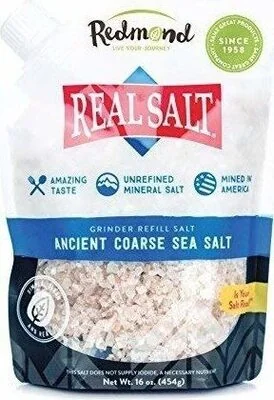 RedmondAncient Coarse Sea Salt100
100/100. 1 ingredient, no added oil, no sweetener listed, none of the 9 additive groups we check.
Best unsweetened
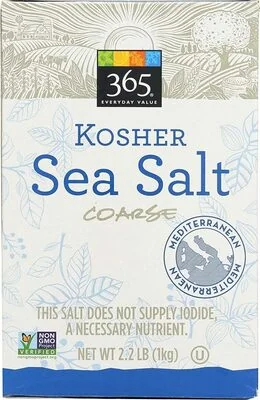 365 by Whole Foods MarketCoarse Kosher Sea Salt100
100/100. No sugar or other sweetener on the label.
No added oil or gum
Photo pendingDavid'sKosher Salt100100/100. 1 ingredients, none of them an oil, gum or carrageenan.
Lowest sodium
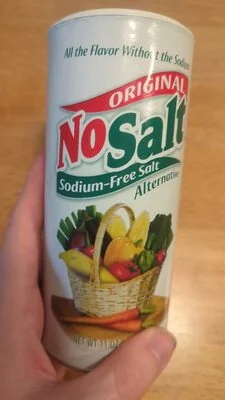 NoSaltOriginal Sodium-free Salt Alternative100
0 mg sodium per 1.2999999523162842 g (1/4 tsp); 100/100.
Most flagged: San Juan Island Sea Salt French Fry Blend lists MSG (89/100).
A 0 to 100 label score, not a nutrition rating: 60 points for nine additive groups not on the label, 25 for a confirmed organic claim.
From the catalog
Kosher salt vs regular salt: 36 salt labels by type
Grouped by the type named on the package (salts whose name gives no type, such as plain “flake salt”, are left out). Iodized salt has potassium iodide added (often with dextrose to keep it stable); anticaking agents keep fine crystals flowing. Flavored and seasoned salts and salt substitutes are left out.
| Type | Labels | List iodide (iodized) | List an anticaking agent | Anticaking agents named |
|---|---|---|---|---|
| Kosher salt | 6 | 0 of 6 | 1 of 6 | Yellow prussiate of soda |
| Table, iodized and plain salt | 7 | 2 of 7 | 5 of 7 | Yellow prussiate of soda, Calcium silicate |
| Sea salt | 22 | 1 of 22 | 4 of 22 | Yellow prussiate of soda, Magnesium carbonate, Tricalcium phosphate |
| Pink Himalayan salt | 1 | 0 of 1 | 0 of 1 | None |
From the catalog
Kosher and table salt side by side: grams per 1/4 teaspoon and sodium
Serving weight and sodium as each maker reports them to USDA FoodData Central. A lighter 1/4 teaspoon means bigger, airier crystals and less salt per spoonful.
| Salt | Type | Serving (as filed) | Sodium per serving | Iodized | Ingredients |
|---|---|---|---|---|---|
| 365 by Whole Foods Market Coarse Kosher Sea Salt | Kosher | 1.5 g (1/4 tsp) | 590 mg | No | sea salt. |
| David's Kosher Salt | Kosher | 1.5 g | 590 mg | No | salt |
| Diamond Crystal Kosher Salt | Kosher | 0.7 g | 280 mg | No | salt |
| Diamond Crystal Kosher Salt Flakes | Kosher | 0.7 g (1/4 tsp (0.7g)) | 280 mg | No | salt |
| La Baleine Kosher Sea Salt | Kosher | 1.3 g (1/4 tsp) | 500 mg | No | sea salt. |
| Morton Coarse Kosher Salt | Kosher | 1.2 g (0.25 tsp) | 480 mg | No | salt, yellow prussiate of soda (anticaking agent). |
| Morton Canning & Pickling Salt | Table | 1.5 g (0.25 tsp) | 590 mg | No | salt. |
| Diamond Crystal Plain Table Salt | Table | 1.5 g (0.25 tsp) | 590 mg | No | salt, yellow prussiate of soda (anticaking agent). |
| Kroger Free-flowing Salt | Table | 1.5 g (1/4 tsp) | 590 mg | No | salt, yellow prussiate of soda. |
| Morton Table Salt | Table | 1.5 g (0.25 tsp) | 590 mg | No | salt, calcium silicate (an anticaking agent) |
| Morton Iodized Salt | Table | 1.5 g (1/4 tsp) | 590 mg | Yes | salt, calcium silicate (an anticaking agent), dextrose, potassium iodide |
| Great Value Iodized Salt | Table | 1.5 g (1/4 tsp.) | 590 mg | Yes | salt, dextrose, potassium iodide, sodium bicarbonate, yellow prussiate of soda. |
Compare the recorded labels
Find the ingredients that matter to you.
This table holds the 12 highest-scoring of the 112 salt we track. See all 112 on the shelf page, including products we cannot score until a current label is on record.
“No …” columns: None found on the label · Listed on the label · Unknown. Diet fit: Fits · Doesn’t fit · Unknown (rules; not medical advice). Claims: verified · not established. Default: most check marks first; not a health score.
| Buy | |||||||
|---|---|---|---|---|---|---|---|
| 100 / 1009 of 9 groups clear · organic not applicable | Product details → | 4 | |||||
Recorded ingredients SEA SALT. Label checked 2026-10-18 · US Source: USDA FoodData Central ↗ · FDC ID 2426246 · data date 2022-12-22 · release 2026-04-30. Brand-submitted label record, public domain (CC0). | |||||||
| 100 / 1009 of 9 groups clear · organic not applicable | Product details → | 4 | |||||
Recorded ingredients SALT Label checked 2026-11-10 · US Source: USDA FoodData Central ↗ · FDC ID 2536699 · data date 2023-04-27 · release 2026-04-30. Brand-submitted label record, public domain (CC0). | |||||||
| 100 / 1009 of 9 groups clear · organic not applicable | Product details → | 4 | |||||
Recorded ingredients SALT Label checked 2026-11-10 · US Source: USDA FoodData Central ↗ · FDC ID 2526597 · data date 2023-04-27 · release 2026-04-30. Brand-submitted label record, public domain (CC0). | |||||||
| 100 / 1009 of 9 groups clear · organic not applicable | Product details → | 4 | |||||
Recorded ingredients SALT Label checked 2026-10-16 · US Source: USDA FoodData Central ↗ · FDC ID 2560475 · data date 2023-06-29 · release 2026-04-30. Brand-submitted label record, public domain (CC0). | |||||||
| 100 / 1009 of 9 groups clear · organic not applicable | Product details → | 4 | |||||
Recorded ingredients SEA SALT. Label checked 2026-10-18 · US Source: USDA FoodData Central ↗ · FDC ID 2372715 · data date 2022-12-07 · release 2026-04-30. Brand-submitted label record, public domain (CC0). | |||||||
| 100 / 1009 of 9 groups clear · organic not applicable | Find where to buy ↗Product details → | 4 | |||||
Recorded ingredients Sea salt, hoja santa ( Piper auritum ) Label checked 2026-10-11 · US Ingredient evidence source ↗Producer claims Sourcing claim not reviewed The catalog establishes this product’s name and photograph. Sourcing claims and a complete ingredient label may still need review. Producer claim source ↗Reviewed | |||||||
| 100 / 1009 of 9 groups clear · organic not applicable | Find where to buy ↗Product details → | 4 | |||||
Recorded ingredients Sea salt (NaCl), Cooking tips Label checked 2026-10-16 · US Ingredient evidence source ↗Producer claims Sourcing claim not reviewed The catalog establishes this product’s name and photograph. Sourcing claims and a complete ingredient label may still need review. Producer claim source ↗Reviewed | |||||||
| 100 / 1009 of 9 groups clear · organic not applicable | Product details → | 4 | |||||
Recorded ingredients SALT, YELLOW PRUSSIATE OF SODA (ANTICAKING AGENT). Label checked 2026-10-16 · US Source: USDA FoodData Central ↗ · FDC ID 2631858 · data date 2023-09-14 · release 2026-04-30. Brand-submitted label record, public domain (CC0). | |||||||
| 100 / 1009 of 9 groups clear · organic not applicable | Find where to buy ↗Product details → | 4 | |||||
Recorded ingredients Syracuse Salt Crystals (NaCl), Black Urfa Chili, Black Lime, Silk Chili, Cobanero Chili Label checked 2026-10-11 · US Ingredient evidence source ↗Producer claims Sourcing claim not reviewed The catalog establishes this product’s name and photograph. Sourcing claims and a complete ingredient label may still need review. Producer claim source ↗Reviewed | |||||||
| 100 / 1009 of 9 groups clear · organic not applicable | Product details → | 4 | |||||
Recorded ingredients SEA SALT, TRICALCIUM PHOSPHATE (FREE-FLOWING AGENT), DEXTROSE, POTASSIUM IODIDE. Label checked 2026-11-10 · US Source: USDA FoodData Central ↗ · FDC ID 2545217 · data date 2023-05-25 · release 2026-04-30. Brand-submitted label record, public domain (CC0). | |||||||
| 100 / 1009 of 9 groups clear · organic not applicable | Product details → | 4 | |||||
Recorded ingredients SALT, DEXTROSE, POTASSIUM IODIDE, SODIUM BICARBONATE, YELLOW PRUSSIATE OF SODA. Label checked 2026-10-18 · US Source: USDA FoodData Central ↗ · FDC ID 2505273 · data date 2023-03-16 · release 2026-04-30. Brand-submitted label record, public domain (CC0). | |||||||
| 100 / 1009 of 9 groups clear · organic not applicable | Find where to buy ↗Product details → | 4 | |||||
Recorded ingredients Silk Chili, Alphonso mango amchur, panela cane sugar, hibiscus, kosher salt, cured sumac Label checked 2026-10-11 · US Ingredient evidence source ↗Producer claims Sourcing claim not reviewed The catalog establishes this product’s name and photograph. Sourcing claims and a complete ingredient label may still need review. Producer claim source ↗Reviewed | |||||||
How the clean score works
No setup needed, and strict: a full 100 needs every additive group clear and a verified organic claim (animal foods also need a verified grass-fed or pasture-raised claim; wild seafood and salt, which have no USDA organic standard, are scored without the organic points, and plant-based milks, cheeses and proteins without the feeding claim). Points: the nine additive groups (seed oils, artificial dyes, MSG, artificial sweeteners, carrageenan, artificial preservatives, hydrogenated oils, corn syrups, banned-abroad additives) share 60 points equally — not found earns a group’s full share, “may contain” earns half, listed earns 0; a verified organic claim is worth 25; a verified grass-fed or pasture-raised claim is worth 15 and counts only for animal foods. No claim, or an expired or unverified claim, earns nothing, so products without those claims cannot reach 100. Unverified or expired ingredient labels receive no score. Equal scores are equal. Equal scores are ordered by the label: no sweetener first, then less added sugar per serving, then the shorter ingredient list. Unknown and stale evidence never passes “Only show matches.” Producer claims and prices do not affect this score. This is not a nutrition, allergy, or safety rating.
As an Amazon Associate I earn from qualifying purchases. Buying links do not influence ingredient results. “Buy on Amazon” opens a reviewed product listing; “Find where to buy” opens the maker’s page. Confirm the package, seller, stock, and current price before checkout. Price observations expire after 30 days.
The full guide · Condiments & seasonings
Choosing salt: what to check before you buy
Choose salt by crystal size, whether it is iodized and how you will use it. Fine salt, coarse kosher salt and finishing flakes can measure differently by volume, so use weight or the recipe’s named salt for a closer match.
Check anti-caking ingredients and any herbs, smoke flavor or other seasonings. Sea, pink and flake salts are not automatically iodized or lower in sodium; read the exact label before substituting.
What to compare
- Crystal size
- Match the recipe’s salt or measure by weight when substituting.
- Iodized or not
- Look for an explicit iodized statement; specialty salts are not automatically iodized.
- Added ingredients
- Check anti-caking agents and flavorings according to your preference.
- Amount and sodium
- Compare the stated weight and sodium rather than assuming a salt color means less sodium.
Your preferences, explained
The clean score is strict and needs no setup: nine additive groups not found in a current ingredient statement, plus a verified organic claim (and a grass-fed or pasture-raised claim for animal foods), are needed for 100; a possible match earns half and a missing claim earns nothing. Missing or expired evidence stays unknown. It does not assess nutrition, allergies, contaminants, or safety.
References
- How much sodium should I eat per day? American Heart Association
- Iodine fact sheet for consumers NIH Office of Dietary Supplements
- Salt and sodium Harvard T.H. Chan School of Public Health
- Sodium in your diet U.S. Food and Drug Administration
An ingredient check is not a nutrition, contaminant, allergy or safety assessment. How we verify labels →
Watch
The video about this page
